


These days, you don’t need a shop or office to do business. Digital entrepreneurship simply means using the internet and technology to get your work done. Whether it’s social media or an app, it’s all online. If you think you need to be a “tech expert,” you’re wrong. In this guide, we’ll start from scratch and see how you can begin your online journey without any prior experience.
Why Digital Entrepreneurship Matters
Just think about how much time we spend on the internet each day? From shopping to learning, everything is happening online. That’s why the opportunities for online business are so immense today. You no longer need to be confined to your city; with the right digital tools, you can make the whole world your customer base. No shop rent, no other expenses—the internet has made starting a business so easy that anyone can start working from home.
Digital Entrepreneurship vs Traditional Business
If we compare traditional businesses with today’s digital businesses, the difference is clear. Traditional businesses are fine, but the truth is that the freedom and low costs of digital work are unmatched anywhere else. Especially for those just starting out, the risk is significantly lower. You don’t have to run around the store; just open your laptop and get to work!
| Traditional Business | Digital Entrepreneurship |
|---|---|
| Physical store or office | Online presence |
| Limited audience (local) | Global reach |
| High startup cost | Lower startup cost |
| Fixed working hours | Flexible working hours |
| Requires physical products | Can be services, info, or digital products |
Types of Digital Businesses You Can Start
People around the world are starting their digital journey in these 6 ways:
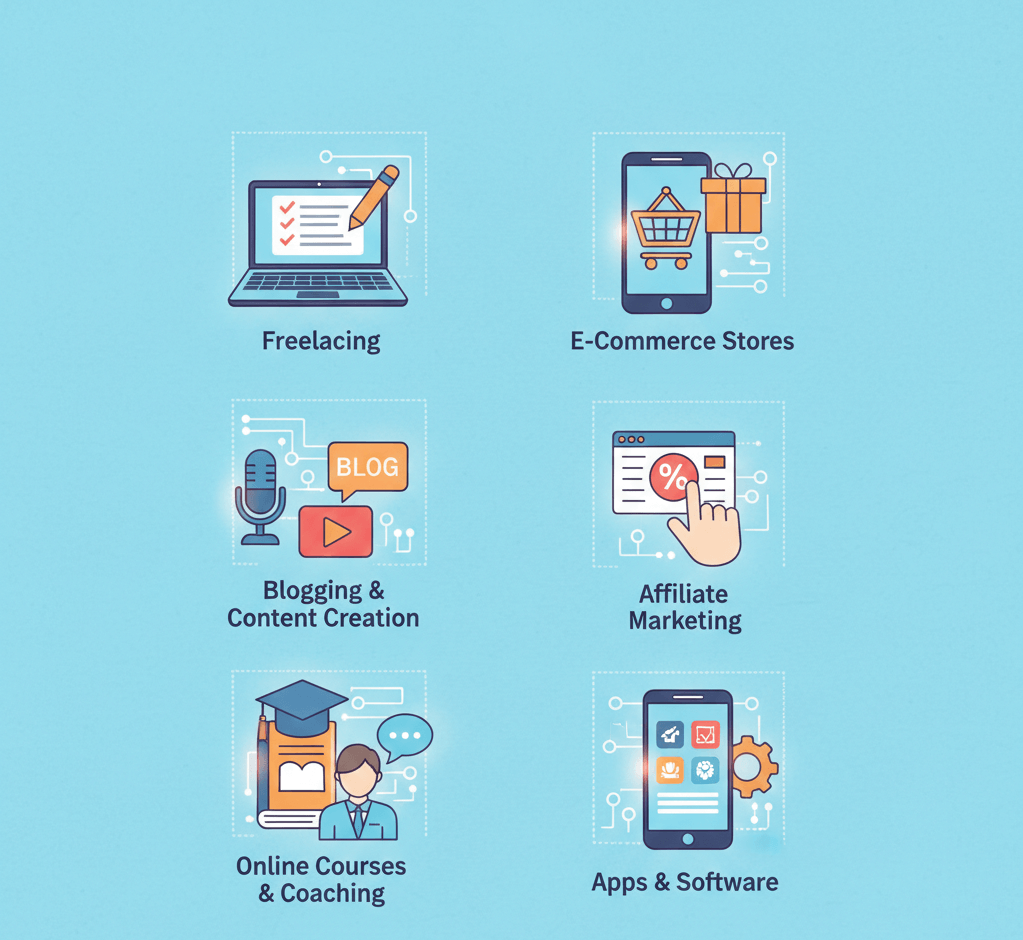
1. Freelancing (Sell Your Skills)
If you know how to write, design, or program, you don’t need an office. Freelancing means you offer your services to clients around the world and are in control of your own time.
2. Blogging and Content Creation
Do you like to talk or make videos? Start YouTube, Instagram, or your own blog. Once people start watching or learning about you, brands will pay you. It’s like having your own TV channel!
3. E-Commerce (Your Online Shop)
Now you don’t need to rent a shop in a market to sell goods. You can sell your goods—whether handmade or cotton—on your website or a marketplace (like Daraz or Amazon).
4. Online Courses and Coaching
Everyone has something they want to learn. If you’re good at math or cooking, create a course on it and sell it. People are willing to pay to learn from home these days.
5. Affiliate Marketing (Commission-Based Work)
This is best for those who don’t want to create their own business. You promote someone else’s good product (like sharing a link to a laptop or book), and when someone buys through your link, you get your share.
6. Apps and Software
If you have an idea that solves a problem for people (like a delivery app or a bookkeeping tool), you can create an app and start a business. It requires a little more hard work, but the earnings can be the highest.
Which path is right for you?
I’ve created a small chart below so you can decide where to start:
| Type | Best For | Start-up Cost |
| Freelancing | for those with freelancing skills | $0 (Zero) |
| Content Creation | for content creation creatives | $0 – $100 |
| E-Commerce | for those selling e-commerce goods | Medium |
| Affiliate | for those skilled in affiliate marketing | $0 |
Key Elements of a Digital Business
If you truly want to build a successful online business, you’ll need to focus on these five things:

A Solid Idea
Just “making money” isn’t the only idea. The best business is one that solves someone’s problem. Think about how you can make people’s lives easier. When you solve someone’s problem, people happily pay.
A Website or Online Presence
Just as a shop had an address in the past, in the online world, your “address” is your website or social media page. You don’t have to build an expensive website on your first day; you can start with a Facebook page or Instagram handle.
Use the Right Digital Tools
The biggest advantage of working online is that a lot of work happens automatically. Learn to use online systems for taking payments and chat tools like WhatsApp Business or chat tools to communicate with customers. These tools can take hours of work in minutes.
Marketing Plan
You’ve opened your shop, but how will people find out? To do this, you’ll need to be active on social media or run ads. Remember, the more visibility you have, the more sales you’ll generate.
Monetization
How will your business make money? Are you selling a service, a product, or just want to earn from ads? Keep your model clear from the start.
Pro-Tip: Don’t try to do everything at once. Start with just one idea and one platform (e.g., Instagram). Once you start getting responses, expand to the rest.
Common Challenges Beginners Face
If it’s a new path, there’s bound to be some fear of getting tired. But if you know what the issue is, finding a solution becomes easier:

Information Overload
There’s so much on the internet that it’s confusing what to learn first—SEO, Marketing, or Design? Trying to do everything at once can end up accomplishing nothing.
- Solution: Don’t learn everything at once. Focus only on the next step. If you want to build a website today, learn only that. Leave everything else for later.
Fear of Technology
Many people stop because they think they need to be a “computer expert” to start an online business.
- Solution: Today’s tools are as easy as using Facebook. You don’t need to learn coding. There are easy tutorials on YouTube for everything. Just get started, and the path will be created.
Getting the First Customers
The shop is open, but no one is coming—that’s the biggest fear.
- Solution: Don’t worry about selling in the beginning, just help people. Give away free massages, make cool videos, or do something for free. Once people trust you, they’ll come to you for purchases.
Steps to Start Your Digital Business (Beginner Friendly)
Here’s an easy step-by-step guide to get started:
Step 1: Select Your Business Idea
Think about what you enjoy doing or what skills you possess. Then ask yourself two questions:
- Is this idea solving someone’s problem?
- Are people willing to pay for this solution?
Step 2: Identify your customers
Not everyone can be your customer. Find out who the people who need you are. What is their age, and where do they spend most of their time on the internet?
Step 3: Build an Online Presence
You don’t need to spend a lot of money on your first day. Start with a simple website or a professional Instagram/Facebook page. All you need is an online address.
Step 4: Create Useful Content
Let people know how much you’re passionate about your work. Share helpful tips and videos. Helping people for free builds trust.
Step 5: Set up a payment method
Decide how people will send you payments. Whether it’s website checkout, bank transfer, or Easypaisa/JazzCash—make it easy so customers don’t have to struggle.
Step 6: Promote Your Business
Don’t just open your shop and sit back. Let people know you’ve started through social media, chatting with friends, and email.
Step 7: Learn and improve
Not everything will be perfect at first. See what’s working and what’s not. Get feedback from people and see your business grow with each passing day.
Why Anyone Can Try Digital Entrepreneurship
The great thing about digital entrepreneurship is that it doesn’t restrict anyone. You don’t need any investment to start this journey:
- You can start with a few thousand rupees, or sometimes even with absolutely nothing.
- Your laptop or mobile is your office.
- If you can use basic internet, you can run a business.
- There’s no boss, work when you want and as much as you want.
Whether you’re a student trying to cover your tuition, a housewife looking to make a name for herself while staying at home, or someone looking for extra income on top of their job—this path is open to everyone. All you need is a little dedication and daily hard work.
Final Thoughts
Digital entrepreneurship isn’t just about making money, it’s about solving people’s problems and improving their lives through the internet. For newcomers, it’s no less than a gift, as it requires neither office support nor the fear of investing millions of rupees.
Yes, it takes hard work and daily learning—but every business starts from scratch.
If you pick an idea from this guide and start working on it consistently, you’ll be amazed at how far you’ve come. The internet has shown you the way; now, your courage and perseverance will take you to success.
Frequently Asked Questions (FAQs)
Absolutely not! This is the best part of digital business. Jobs like freelancing, blogging, or affiliate marketing only require your time and skills. Start with zero investment and use the first income to grow your business.
You don’t need to know coding. If you can read these messages and use social media, you can get started. These days, there are simple “drag and drop” tools for everything, and everything else can be learned in minutes from YouTube.
Remember, this isn’t a lottery. You might find work within the first week of freelancing, but it could take up to six months for blogging or YouTube. It’s all about your hard work and patience. The more time you put in, the sooner you’ll see results.
In my opinion, freelancing and affiliate marketing are the best. Why? Because in this, you don’t have to create any product of your own. You either sell your service or earn commission by promoting someone else’s product.
Beware of “get rich overnight” schemes on the internet—they are fraudulent. But if you are working by learning a skill or selling a real product, then it is 100% real and safe. Almost all the businesses in the world are being run online today.


Pingback: Real-World Examples of Digital Entrepreneurs: Success Stories in the Modern Era
Pingback: 4 Types of Entrepreneurship Explained with Real Examples