
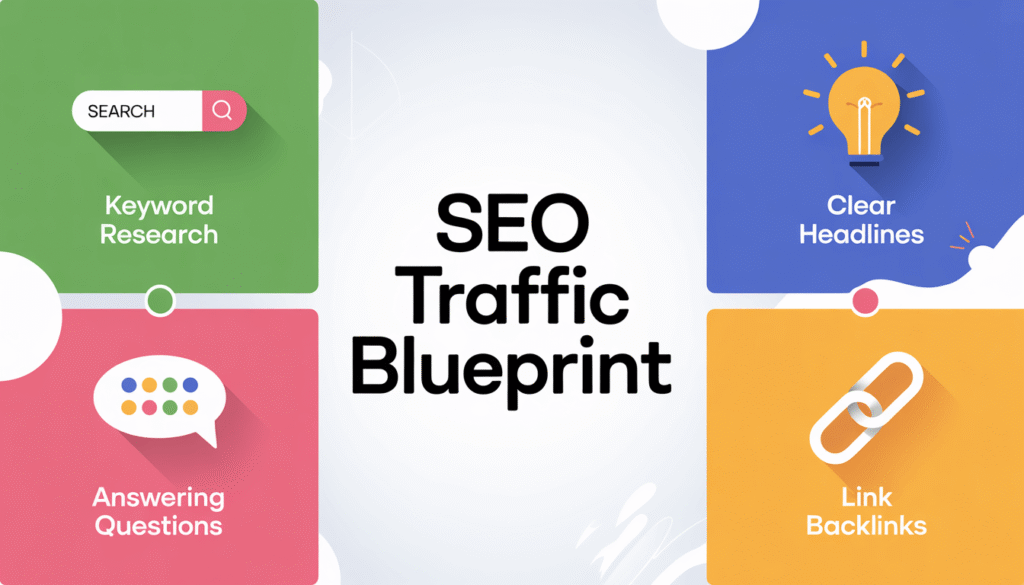

Do you want to bring more people to your website? The truth is, increasing website traffic doesn’t require any tricks or luck, but rather the right strategy. When you create useful content and share it in the right places, visitors will come automatically. In this article, we’ll show you 7 easy and beginner-friendly ways to increase your website traffic.
1. Write Content People Are Already Searching For
If you want people to visit your website, say what they want to hear, not just what you want to say.
Think about what your visitor is thinking? What’s the issue facing them? What would they type into Google?
For example: If you write “My Fitness Journey,” that’s just your story. But if you write “How to Lose Belly Fat at Home (Without a Machine),” that’s a solution. People are always looking for solutions.
Remember the 80/20 rule here: 80% of your traffic comes from just 20% of your best articles. This means that instead of writing about useless topics, write answers to the questions people are actually asking. Focus on quality, not quantity.
2. Make Your Headlines Clear, Not Clever
A clear and appropriate heading gets far more clicks than a “fancy” or complicated one. People have limited time when they’re scrolling the internet. If they don’t understand at a glance how your article will benefit them, they’ll move on.
See the difference:
❌ “Unlock Your Inner Potential”
✅ “7 Daily Habits That Improve Focus and Productivity”
Your heading should contain three things:
- Promise a clear benefit
- Use simple words
- Match what people search for
When a heading is simple, it’s easier for both Google and people to understand.
Quick Tip for You: When writing a headline, always ask yourself: “What will a typical person understand by clicking on this link?” If the answer is ‘no,’ change the heading.
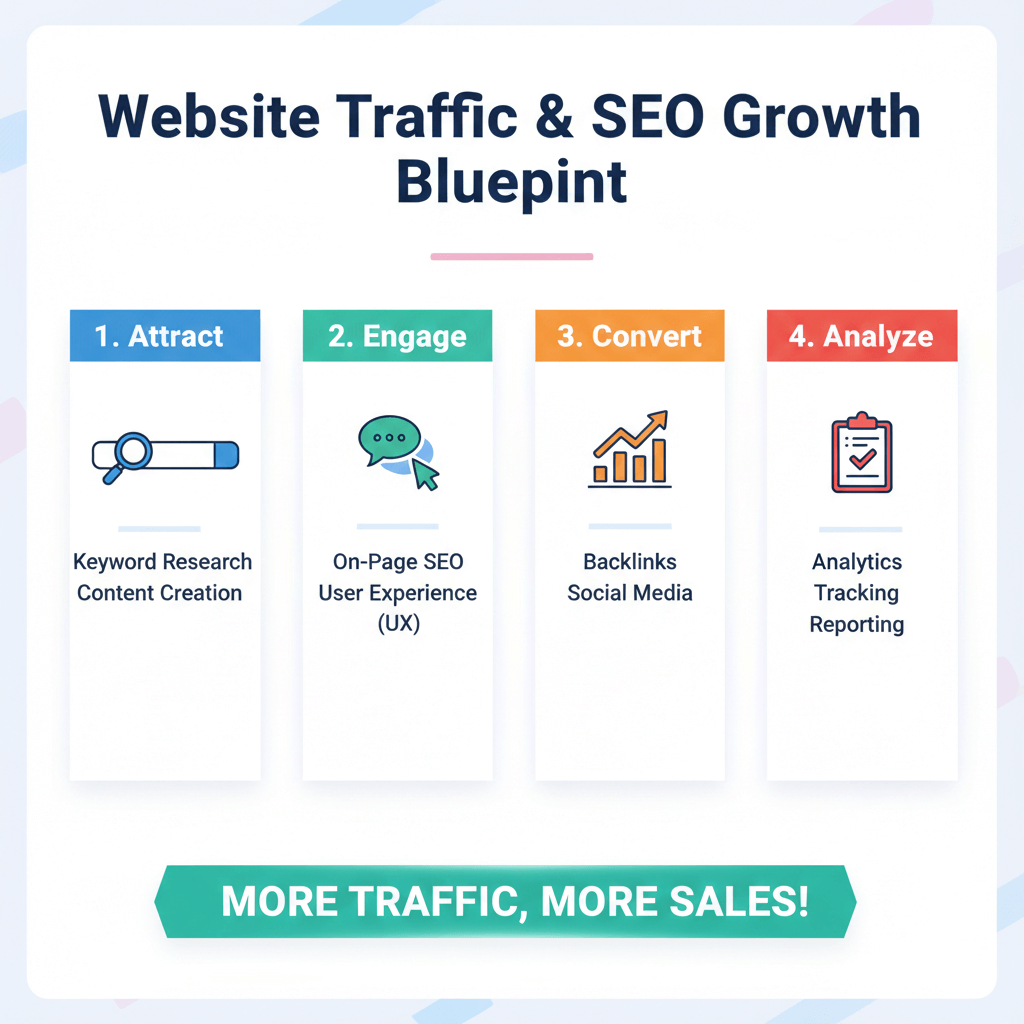
3. Answer Questions Directly (This Brings Google Traffic)
These days, people don’t search for long stories on Google; they ask questions. For example:
- How to get 1000 visitors a day to your website?
- Can I do SEO myself?
If your article answers these questions directly and clearly, Google will rank your page higher.
A Pro Tip: Write your article headings in question-like format (like people write on Google). When you use the same words people are searching for, Google will assume your content is the best. Instead of getting bogged down in long words, first give a straight answer in 2-3 sentences and then give details.
How to get 1000 visitors a day to your website?
Look, this isn’t an overnight miracle. Reaching 1,000 visitors requires a little patience and the right direction. You just need to do these four things:
- Write consistently
- Target the right questions
- Sharing posts on social media and communities
- Build trust
Advice: Don’t chase going viral. Just write the best solution to a problem, and then repeat it.
Also Read: What is Creator Monetization? The Complete Guide to Making Money in 2026
Can I do SEO myself?
Yes, absolutely! SEO isn’t rocket science that only experts can do. Basic SEO simply means:
- Writing useful content
- Using appropriate and clear headings (titles)
- Making the article so simple that the reader can understand it
- Making the website fast and easy on mobile
You don’t need to be a “tech expert.” If you can explain something to someone easily, then understand that you can do SEO.
4. Share Your Content Where Your Audience Hangs Out
Just hitting the “Publish” button isn’t enough—that’s only half the battle. Real traffic comes when you let people know you’ve written something.
But that doesn’t mean you should just start throwing links everywhere. Try these three methods:
- Choose the right groups: Join Facebook groups related to your topic and help people there.
- Share top tips: Instead of sharing the entire article, pull out 2-3 useful points from it and post them on Instagram or LinkedIn.
- Quora and Forums: If someone is asking the same question you wrote an article on, explain it to them first and then provide a link.
Believe me: Spamming (pushing links) drives people away. Help people first, then provide your link. When you solve someone’s problem, they happily come to your website.
5. Improve Old Posts Instead of Only Writing New Ones
Many people make the mistake of only writing new articles and forgetting the old work. The truth is that updating old articles can double or triple your traffic.
You can do these four things:
- Give new information: If something is outdated, update it to current times.
- Improve the heading: If the old heading wasn’t catchy, make it a little more interesting.
- Make paragraphs simple: If something seems difficult, write it in simpler words.
- Include more examples: People understand faster through examples.
Remember: Google likes “fresh” content. Sometimes it’s better to polish one of your older articles than to write three new articles. This helps Google understand that your content is still relevant.
Quick Tip: Check your older posts every six months. You can reach the top by updating the posts that are getting a lot of traffic.
6. Make Your Website Easy to Read
Even if your content is excellent, but difficult to read, people will abandon your website. To keep visitors on your site, do the following:
- Write short paragraphs: People get bored with long statements.
- Insert subheadings: So the reader knows what’s next.
- Use bullet points: This makes the message easier to understand.
- Avoid difficult words: The simpler the language, the more people will like it.
When people stay longer on your website, it signals to Google that your content is actually useful—and then it starts sending you more traffic.
This also answers another big question:
Why 96.55% of content gets no traffic from Google?
Most articles and posts get zero traffic because:
- The real question doesn’t have an answer: People write just for the sake of writing, not to see what people are searching for.
- Copy-pasted or poor quality: Google doesn’t like things that are already there in 100 places or that don’t offer anything new.
- The topic is too broad: It’s difficult to write about “Health,” but it’s more beneficial to write about “How to cure back pain from sitting at the office.”
- Difficult to read: If the website design or writing is confusing, people will immediately run away.
Traffic only comes when your content is specific (on a specific topic), helpful (talks about something useful) and easy to understand.
Also Read: 10 High-Income Digital Marketing Skills to Master in 2026 (Beyond SEO & Social Media)
7. Build Internal Links Between Your Articles
Internal links mean that you link to another article within an article on your own website.
For example: If you’re writing about “Email Marketing,” include a link to another post about “How to Build an Email List.”
What’s the benefit of this?
- People stay longer: Visitors read the next article after the first one.
- Google understands: Google understands your website’s structure better.
- Gets support: Your old and new posts help drive traffic to each other.
Think of your website like a “web”—where all the pages are connected to each other in a natural way.
Bonus Tip: Be Consistent (This Is the Real Secret)
Many people give up too quickly. Website traffic always comes slowly in the beginning.
If you post one useful article every week for six months, your results will be much better than someone who posts 20 articles in a single month and then disappears.
Consistency builds trust—both with readers and with Google. When you write consistently, Google recognizes that your website is truly serious.
Final Thoughts
Building website traffic isn’t an overnight task, but if you work hard in the right direction, it’s not difficult. Just remember that your goal shouldn’t be just to “write,” but to help people. When you solve people’s problems, explain them in simple terms, and keep working consistently, traffic will start coming naturally.
So, start implementing these 7 tips today and watch your website grow!
Also Read: Understanding the 4 Main Types of Entrepreneurship (With Examples)
FAQs
If you work consistently and write on relevant topics, it generally takes 3 to 6 months to see results.
Not necessarily, but it makes your job easier. In the early days, when traffic from Google is low, people come quickly from social media.
It’s better to write one or two excellent articles per week than to post meaningless, low-quality articles daily.
If the website is clean and works well on mobile, people will stay longer. If the design is bad, people will leave immediately.
Both are good, but Google traffic is more long-lasting. Social media brings immediate traffic, but Google keeps giving you visitors for years.